
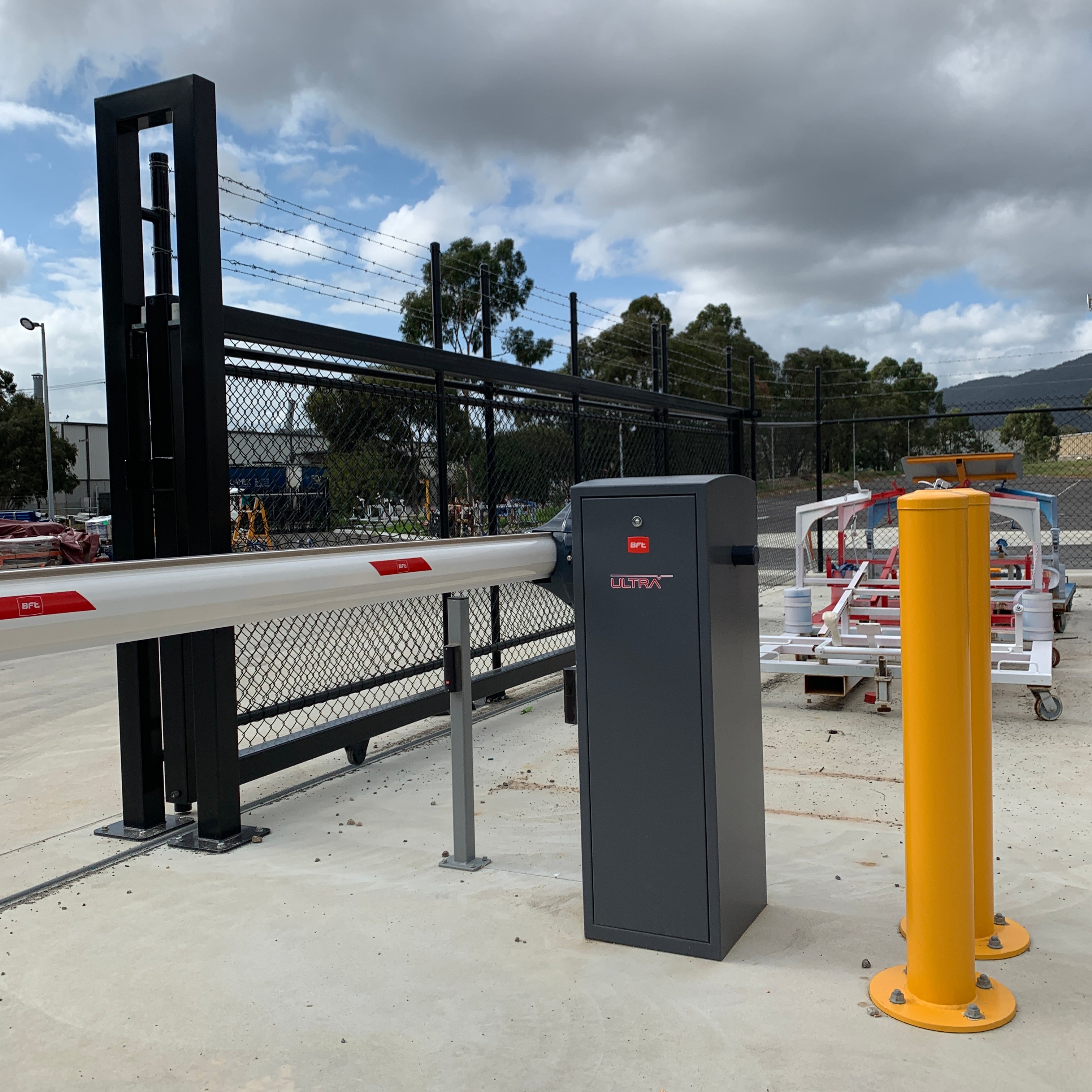
High Speed Boom Gates in Melbourne — Fast Cycle Barriers for High-Traffic Facilities
Filters
4 products

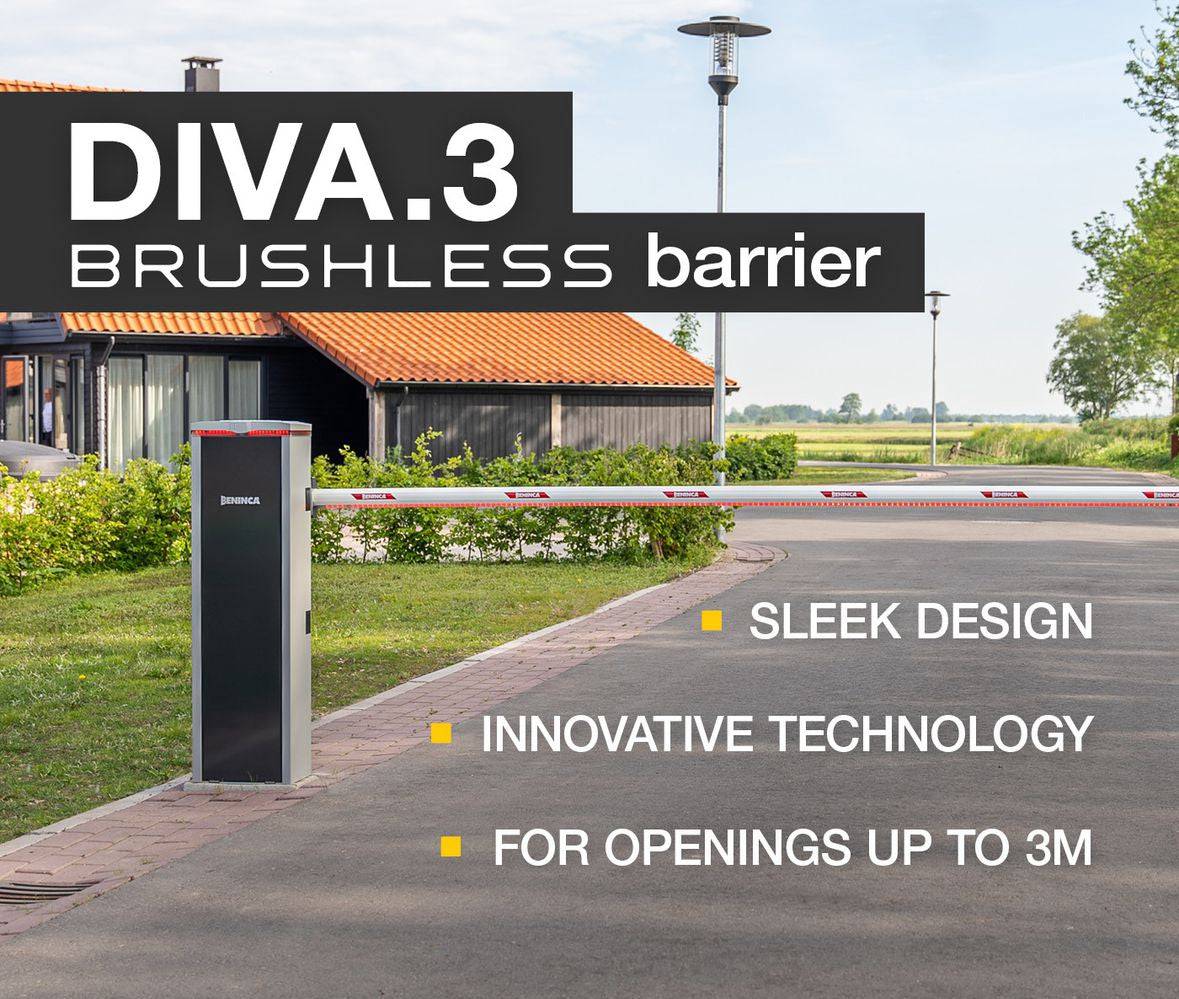
What Is a High-Speed Boom Gate?
A high-speed boom gate is a barrier designed for sites where vehicles move through constantly, across long hours, often in both directions at the same time. The motor, arm, and control electronics are all rated for continuous, high-frequency operation that would burn out a standard commercial gate within weeks.
The key technical differences are open time, cycle rating, and arm construction. A standard boom gate opens in 4 to 6 seconds and is rated for a few hundred cycles per day, and a high-speed model opens in under 2 seconds and is rated for several thousand. The arm is reinforced to absorb the mechanical stress of rapid acceleration and deceleration without warping or cracking over time.
If your site runs moderate traffic in a standard strata or commercial car park, a high-speed gate is more than you need.
See our car park boom gates for standard commercial applications.
How Fast Do High-Speed Boom Gates Open?
Open speed is measured in seconds from trigger to fully raised. Cycle rate is measured in the total number of open-and-close operations per hour the motor is rated to sustain continuously.
| Specification | Standard Boom Gate | High Speed Boom Gate |
|---|---|---|
| Open time | 4 to 6 seconds | 0.8 to 1.2 seconds |
| Close time | 4 to 6 seconds | 2 to 3 seconds |
| Max cycles per hour | 20 to 40 | Continuous use, allowing non-stop operation without an hourly limit; other times rated for up to 3,000 operations per day |
| Duty cycle rating | Light to medium | Continuous / heavy industrial |
| Arm construction | Standard aluminium | Reinforced, impact-rated |
| Motor type | AC induction or standard DC | Brushless DC or high-torque AC |
Where are High-Speed Boom Gates Used?
The common factor across every high-speed boom gate application is volume. These sites cannot afford a gate that creates a queue, fails under load, or requires a technician visit every few months.
Hospital Car Parks and Medical Facilities
Hospitals run 24 hours and constantly deal with patient transport, ambulance access, staff shift changes, and visitor traffic all move through the same entry points.
A gate that takes 5 seconds to open creates congestion at peak times, but a high-speed gate clears the queue before it forms. For ambulance bays and emergency vehicle access in particular, gate response time is a safety consideration.
Recommended Models:
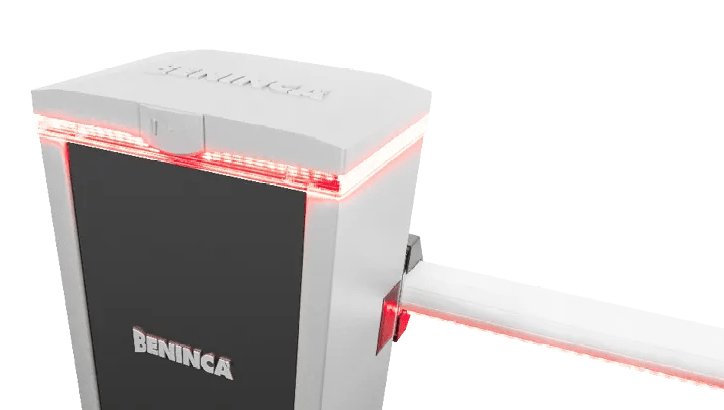
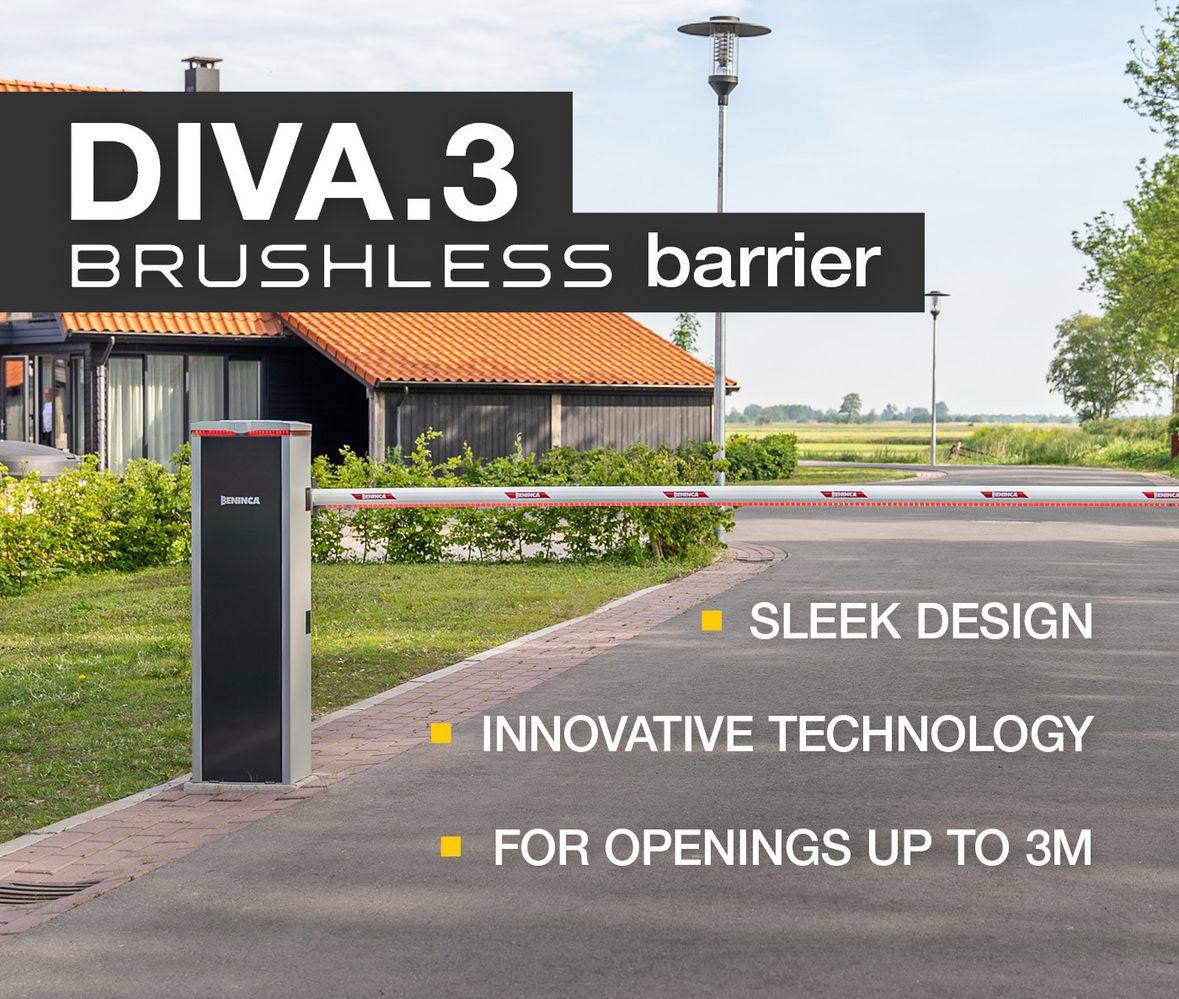
- Beninca DIVA 5m suits hospital car parks with wide lane entries, opening in 2.5 seconds on a 24V brushless motor rated for continuous use.
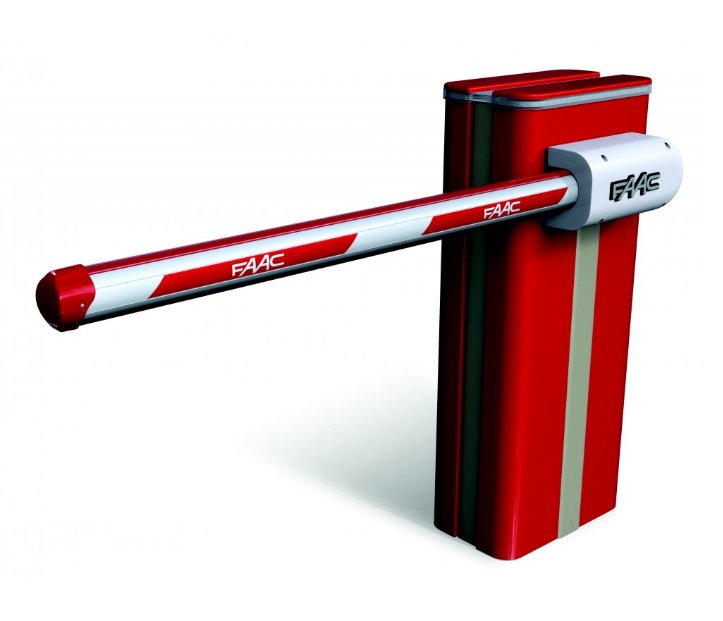
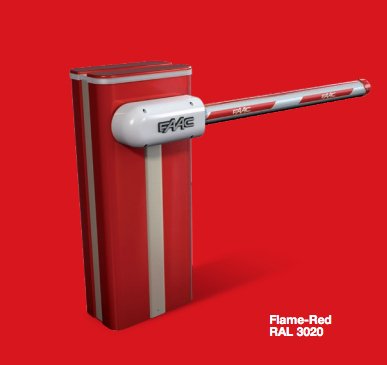
- FAAC B680 (3m, 5m, or 7m arm) delivers 100% continuous duty cycle with built-in obstacle detection, well suited to ambulance bay and emergency access points where safety and reliability are non-negotiable.
Logistics and Warehouse Facilities
Warehouses in high-volume industrial precincts see delivery vehicles, containers, forklifts, and staff cars all cycling through the same gates across two or three shifts. The duty cycle demand is extreme.
A gate specified for a strata car park will fail quickly in this environment. High-speed boom gates rated for heavy industrial use are the only appropriate product for logistics applications.
Recommended Models:
- FAAC B680 7m is one of the few high-cycle gates with a 7m arm option, making it the right choice for wide industrial entries handling truck and container traffic.
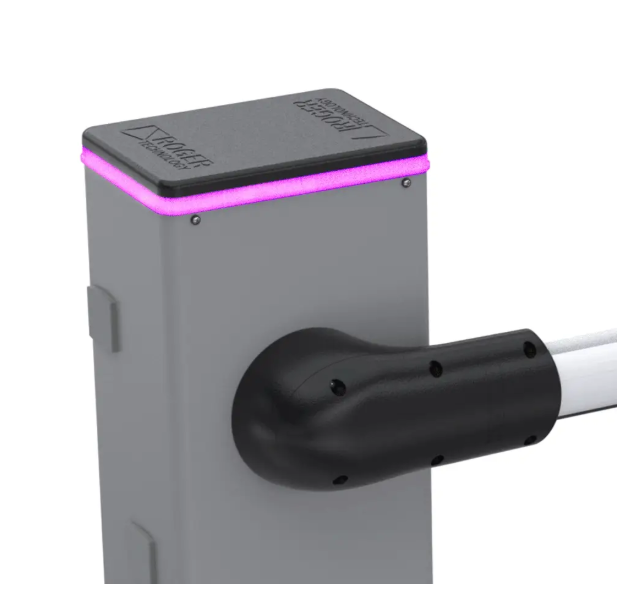
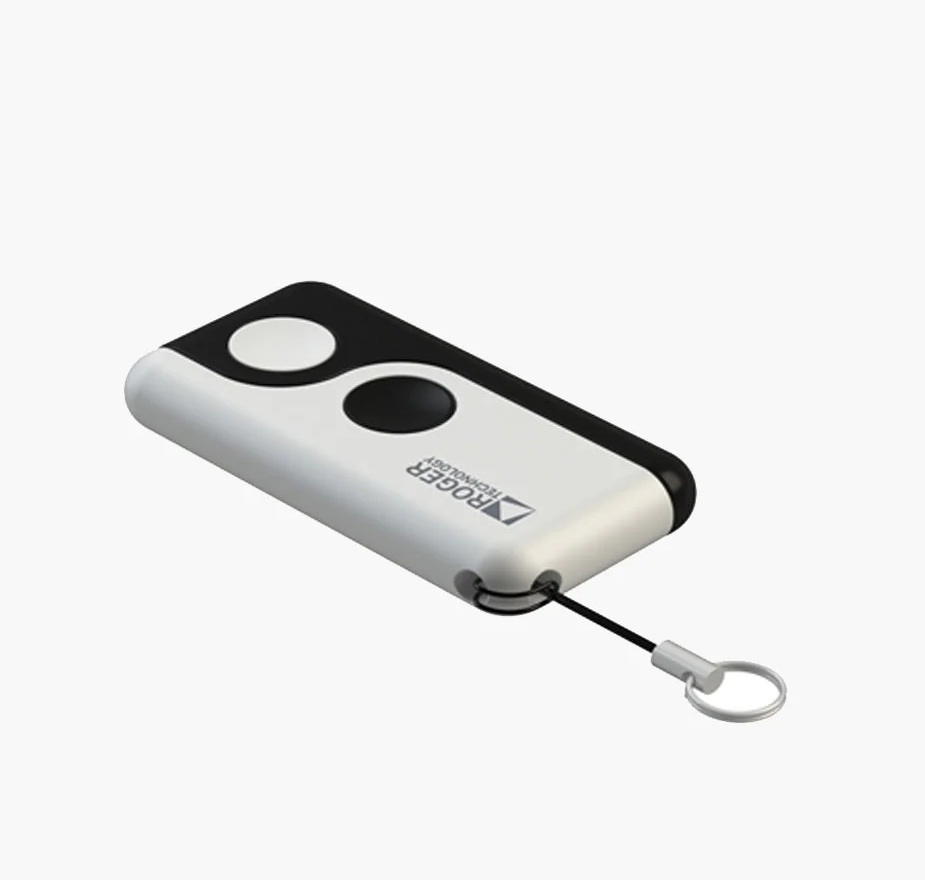
- Roger Bionik 4m handles up to 2,500 operations per day on a compact 36V brushless motor, opening in 2 seconds, purpose-built for high-demand environments where footprint and cycle endurance both matter.
Drive-Through Facilities
Fast food drive-throughs, car washes, and fuel stations need gates that do not slow the customer flow they are designed to serve. When a barrier opens slowly, that defeats the purpose of a fast-service operation. High-speed models open fast enough to be invisible in the transaction.
Recommended Models:
- Beninca DIVA 3m is the fastest option in PGA's range for short-span drive-through entries, opening a 3m arm in 0.9 seconds.
- Roger Bionik 4m, for wider areas, opens in 2 seconds and handles up to 2,500 cycles per day, enough for the highest-volume fast food or car wash operations.
Airport Car Parks and Large Commercial Sites
Airport car parks combine high daily volume with the need for ANPR or ticketing integration at every entry and exit point. High-speed gates pair with loop detectors and plate-recognition cameras to process vehicles without driver interaction.
The gate opens before the driver reaches it and closes immediately after the vehicle passes.
Recommended Models:
- FAAC B680 is a strong fit for airport and large commercial sites where arm length flexibility (3m to 7m) and 100% continuous duty cycle are both required. Its integrated speed control and soft start/stop deceleration handle variance in vehicle approach speeds typical at airport entries.
Pair with a loop detector and ANPR camera via the gate's relay input for a fully automated, touchless entry and exit system.
High-Speed vs Standard Boom Gate: Which Do You Need?
Not every high-traffic site needs a high-speed gate. The right product still depends on your actual daily cycle count and what happens if the gate fails.
If your site is at the boundary between medium and high, round up. A gate running near its maximum rated cycle count wears out faster and fails sooner than one operating comfortably within its limits.
| Use Level | Daily Cycles | Typical Site | Recommended Category |
|---|---|---|---|
| Light | Up to 50 | Residential strata, small office car park | Standard boom gate |
| Medium | 50 to 200 | Commercial car park, school, medical centre | Commercial boom gate |
| High speed | 200 and above | Hospital, warehouse, drive-through, airport | High-speed boom gate |
| 24-hour operation | Any volume across 3 shifts | Industrial, logistics, emergency services | High-speed boom gate |
Duty Cycle: How Many Cycles Can a Boom Gate Handle Per Day?
Duty cycle is a rating that tells you how hard a motor can work before it needs to rest. It is expressed as a percentage of continuous operation, or in many commercial boom gates, as a rated number of cycles per day.
A motor rated at 50% duty cycle can run for 30 minutes out of every hour, while a motor rated at 80% duty cycle can run for 48 minutes out of every 60. For high-speed applications, look for motors rated at 100% duty cycle, or those specified with a cycle-per-day rating above 1,000.
The practical consequence of ignoring duty cycle is motor failure: an overloaded motor overheats, its thermal protection trips repeatedly, its components degrade faster, and eventually it stops opening the gate entirely. Getting the duty cycle right at purchase costs nothing, but replacing a failed motor costs time, a service call, and gate downtime.
For professional installation and ongoing servicing of high-cycle boom gate systems across Melbourne, our team can advise on the right duty cycle specification for your site before you order.
High-Speed Boom Gates With ANPR and Access Control Integration
High-traffic sites rarely use remote controls or keypads as the primary access method. The volume of vehicles makes manual triggering impractical. Most high-speed boom gate installations pair with automatic triggers: loop detectors on the exit side, ANPR cameras on the entry side, or RFID readers for staff and credentialled vehicles.
Every high-speed boom gate we stock has a relay input that accepts a trigger signal from any external access control device. ANPR, RFID, loop detectors, and intercoms all connect via this relay. The gate opens on signal.
See our full boom gate access control range for compatible hardware, or contact our team for a complete system recommendation.
Frequently Asked Questions
How fast does a high-speed boom gate open?
High-speed boom gates open in under 2 seconds from trigger to fully raised. Confirm the exact open time for each model from its product page before specifying, as times vary between the Beninca DIVA, Centsys SECTOR 3, and other high-cycle models.
What duty cycle do high speed boom gates handle?
High-speed boom gates are rated for continuous operation, typically 100 or more cycles per hour and several thousand cycles per day. Standard commercial boom gates are rated for 20 to 40 cycles per hour. If your site exceeds 200 cycles per day, high speed is the correct category.
Are high-speed boom gates suitable for hospital car parks?
Yes. Hospitals are one of the primary applications for high-speed boom gates. The combination of 24-hour operation, high vehicle throughput, and critical access requirements (including ambulance and patient transport bays) demands a motor and arm rated for continuous heavy-duty cycling.
Can high-speed boom gates be solar-powered?
No. High-speed, high-cycle operation requires consistent mains power. Solar systems with battery backup are suited to low-cycle applications (up to around 50 cycles per day). Running a high-cycle gate on solar will deplete the battery rapidly and cause the gate to fail. For off-grid applications, see our solar boom gates for sites with lower cycle requirements.
What is the difference between a high-speed and a standard boom gate?
The difference is in the motor, arm construction, and cycle rating. A standard boom gate opens in 4 to 6 seconds and is rated for a few hundred daily cycles, but a high-speed model opens in under 2 seconds and is rated for continuous multi-shift operation. Standard models are appropriate for most strata and commercial car parks. High-speed models are built for sites where volume, reliability, and throughput are the primary requirements.