
Boom Gate Access Control Melbourne — Shop by Entry Method
Filters
5 products

Access Control Methods For Boom Gates: Which One Suits Your Site?
The right method of access control depends on your site traffic, security level, and who needs access.
Remote Controls
A radio-frequency remote sends a signal to the gate receiver, and the gate opens. Most boom gate kits include one or two remotes. Additional remotes can be added up to the receiver's maximum user capacity, which varies by model and brand.
Best for residential driveways, small strata car parks, and any site where the number of regular users is low and manageable. View BFT Mitto and FAAC remote controls in our access control range.
RFID Cards and Fobs
RFID access control uses proximity technology. A reader mounted at the entry point detects an authorised card or fob presented within range, verifies it against the stored user list, and triggers the gate to open.
RFID suits strata buildings, commercial office car parks, and any site with a defined, managed user base. Most RFID systems handle 200 to 500+ users and allow individual cards to be added or removed without changing the system for all other users. Useful when staff turnover is high or residents change.
Keypads and PIN entry
A keypad allows access via a numeric code entered at the gate; no card or remote is required. Codes can be changed without replacing any hardware, which makes keypads useful for visitor management or secondary entry points where a temporary code needs to be issued and then cancelled.
Keypads work well as a secondary access method alongside RFID or remotes. For example, a strata car park where residents use RFID fobs but a PIN code is available for authorised visitors or tradespeople is the most common pairing.
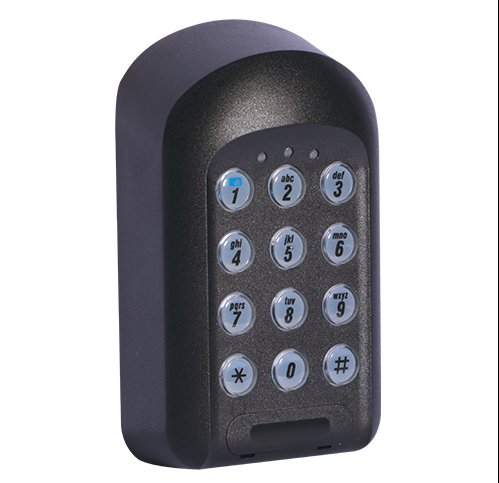
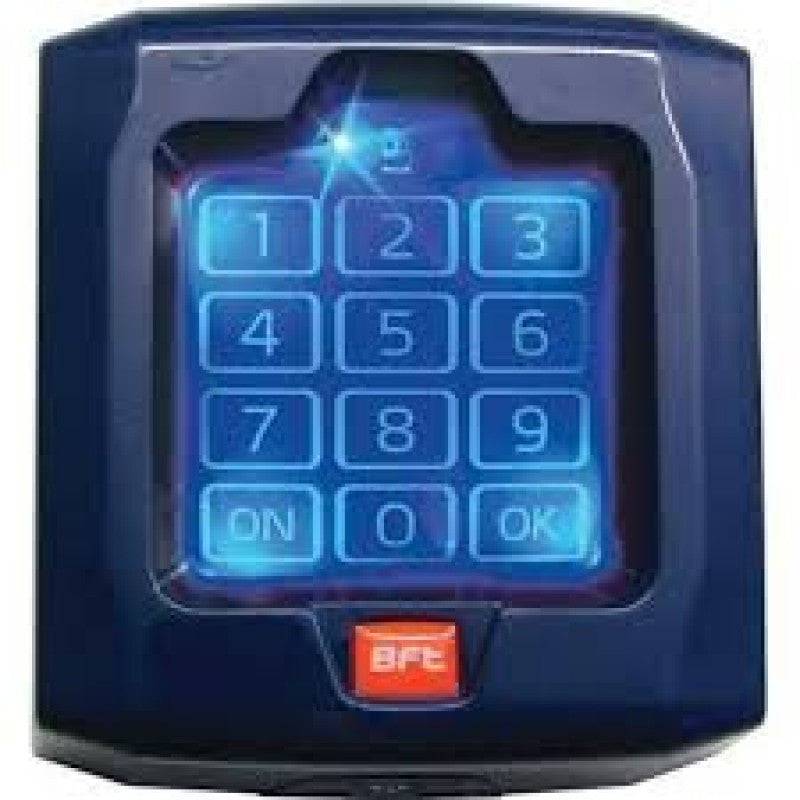
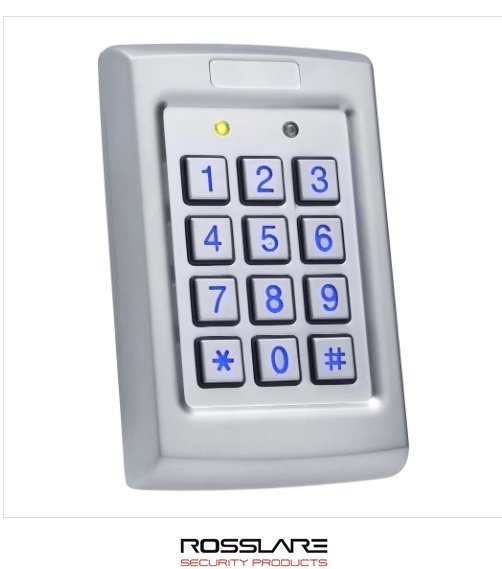
PGA stocks branded wireless keypads for all five supported gate brands, plus a universal hardwired option that suits any motor:
- BFT Q Bo wireless keypad for BFT motors. Note: requires a Clonix receiver on Thalia BT control boards installed from December 2024.
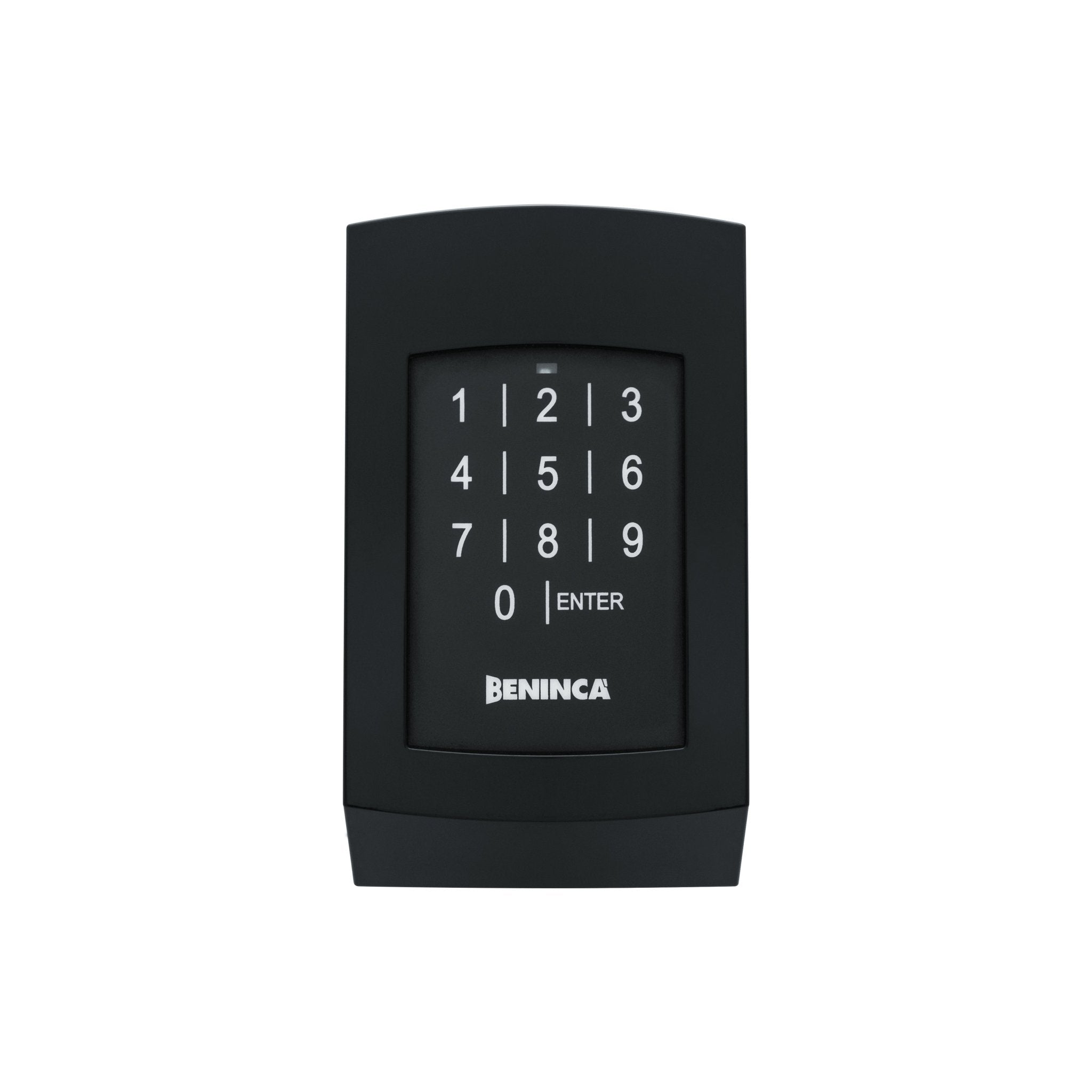
- Beninca wireless keypad stores up to 254 PINs, for Beninca motors.
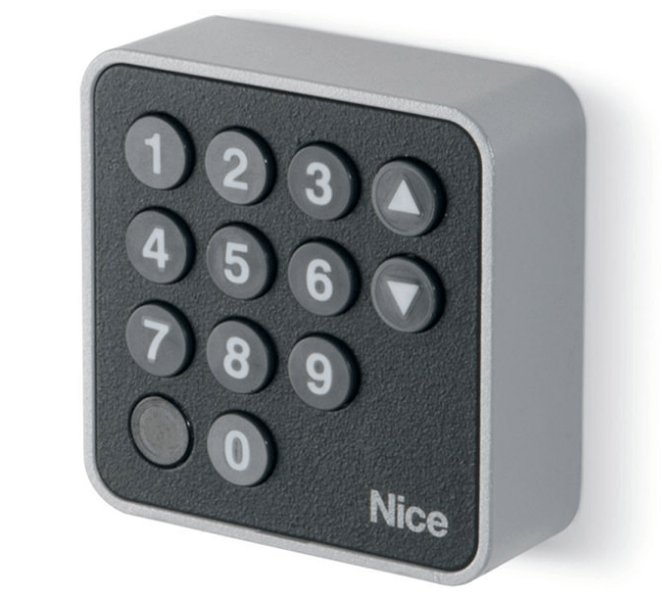
- Nice ERA wireless keypad IP54 weather rated, for Nice motors.
- Centsys SmartGuard wireless keypad stores up to 1,000 PINs, for Centsys motors.
- Rosslare AC-Q41SB hardwired keypad anti-vandal stainless steel, compatible with all gate motor brands via relay.
Inductive Loop Detectors and Exit Sensors
An inductive loop detector is a wire loop embedded in the ground at the exit lane. When a vehicle drives over the loop, the sensor detects the change in the magnetic field and triggers the gate to open automatically. No remote, card, or code required.
This is the standard solution for automatic exit in any unattended boom gate installation. It removes the need for every departing vehicle to carry a remote or card, and it prevents the gate from closing on a vehicle that is still in the lane. View the e-loop and exit sensor range compatible with our boom gate systems.
Intercoms
A video or audio intercom at the entry point allows visitors and couriers to speak with reception, security, or a resident before the gate opens. The person on the receiving end verifies the visitor and triggers the gate remotely via a button press on the intercom panel or their phone.
Intercoms are not a standalone boom gate access control system; they are a visitor management layer. Intercoms are typically paired with another primary access method (RFID for regular users, intercom for guests) at managed commercial buildings, gated communities, and any site that requires visual verification before granting entry.
ANPR — Automatic Number Plate Recognition
ANPR cameras read the licence plate of an approaching vehicle and compare it against a whitelist of authorised plates. If the plate matches, the gate opens without any driver action. If it does not match, the gate stays closed.
ANPR is the highest-security and most frictionless access control method available for boom gates, because the vehicle is the credential. It is increasingly common in large commercial car parks, hospital facilities, and any high-volume site where removing the driver action entirely improves throughput.
The ANPR cameras connect to a boom gate via a standard dry-contact relay input, and the system sends a relay trigger when it detects a matched plate; the gate opens on that signal. The gate itself does not require any ANPR-specific wiring or configuration beyond a connected relay input.
Which Access Control Method Suits Your Site?
| Access Method | Best For | Security Level | Approx. Cost Tier | Notes |
|---|---|---|---|---|
| Remote control | Residential, small commercial | Low to Medium | Low | Simple, reliable, included with most gate kits |
| RFID card/fob | Strata, commercial office, staff car parks | Medium | Low to Medium | Tap-and-go, manages 200 to 500+ users |
| Keypad / PIN | Visitor management, secondary entry | Medium | Low | Codes changed without replacing hardware |
| Inductive loop | Automatic exit — no driver action | Automatic | Low | Pairs with any primary entry method |
| Intercom | Visitor and courier management | Medium | Medium | Visual verification before entry |
| ANPR | High-volume commercial, no-touch entry | High | High | Plate whitelist, frictionless |
How Access Control Integrates With Boom Gates
Every boom gate we stock has a standard relay input built into the controller board. This input accepts a trigger signal from any compatible access control device. When the device sends a trigger (a card is tapped, a plate is matched, a code is entered), the controller receives the signal and opens the gate.
The gate does not know or care what triggered it. A BFT Mitto remote, an RFID reader, a keypad, and an ANPR camera all produce the same relay signal. The gate responds identically to all of them. This is why access control methods can be combined on the same gate: RFID for staff entry, loop detector for automatic exit, intercom for visitors, all wired to the same controller via separate relay inputs.
Loop detectors work differently. They sit on the exit side and continuously monitor the ground beneath them. When a vehicle drives over the loop, the detector triggers the gate to open automatically; no user action required.
If you are not sure which access control method suits your existing gate or your site layout, speak to our technical team before purchasing. Wiring an incompatible access control device to a gate controller can damage the board. Our team can confirm compatibility and advise on the correct wiring for your specific combination.
For professional installation across Melbourne or gate servicing and access control upgrades, our team handles the full supply and fit.
Frequently Asked Questions
What is the best access control method for a boom gate?
There is no single best method. The right choice depends on your site. Remote controls suit small residential sites with a handful of users. RFID suits strata and commercial sites with a defined, managed user base. ANPR suits high-volume commercial sites where frictionless, no-touch entry is the priority. Use the decision table above to match your site type to the appropriate method.
Can a boom gate open automatically with ANPR?
Yes. An ANPR camera reads the approaching vehicle's licence plate and checks it against an authorised whitelist. If the plate matches, the camera sends a relay signal to the gate controller and the boom gate opens without any action from the driver. The camera connects to the gate via the controller board's dry-contact relay input.
Do I need a loop detector for automatic exit?
For any unattended exit lane, yes. A loop detector embedded in the ground triggers the gate to open as a vehicle approaches from the inside. Without it, exiting vehicles need a remote or card to open the gate from the exit side. Loop detectors also provide a safety function; they prevent the gate from closing on a vehicle that is still in the lane.
What is the difference between RFID and ANPR access control?
RFID requires the driver to carry a credential (a card or fob) and present it to a reader at the entry point. The reader verifies the credential and triggers the gate. ANPR requires no credential, since the vehicle's licence plate is the identifier. RFID is lower cost and suits managed user groups. ANPR costs more but is completely frictionless and doesn't rely on users carrying anything.
Can I control a boom gate with a remote control?
Yes. Remote controls are the most common boom gate access control method and are included as standard with most boom gate kits. Additional remotes can be programmed to the receiver up to its maximum user capacity. For sites with more than 20 to 30 users, an RFID system is generally more practical than distributing a large number of individual remotes.
Does a boom gate need an intercom?
Not as a requirement. An intercom is a visitor management layer, not an access control system. Most boom gate installations work without one. They become relevant when a site has regular visitors, couriers, or unscheduled guests who need to be verified before entry is granted. For example, a gated commercial building or a managed apartment complex with a concierge.
What access control works with BFT boom gates?
BFT boom gates natively support BFT-branded remote controls including the BFT Mitto range. They are also compatible with third-party RFID readers, keypads, and intercoms via the controller board's wired input. ANPR and other relay-based systems connect via the dry-contact relay input. Confirm your specific model with the BFT product specifications or contact our team for model-specific advice.