
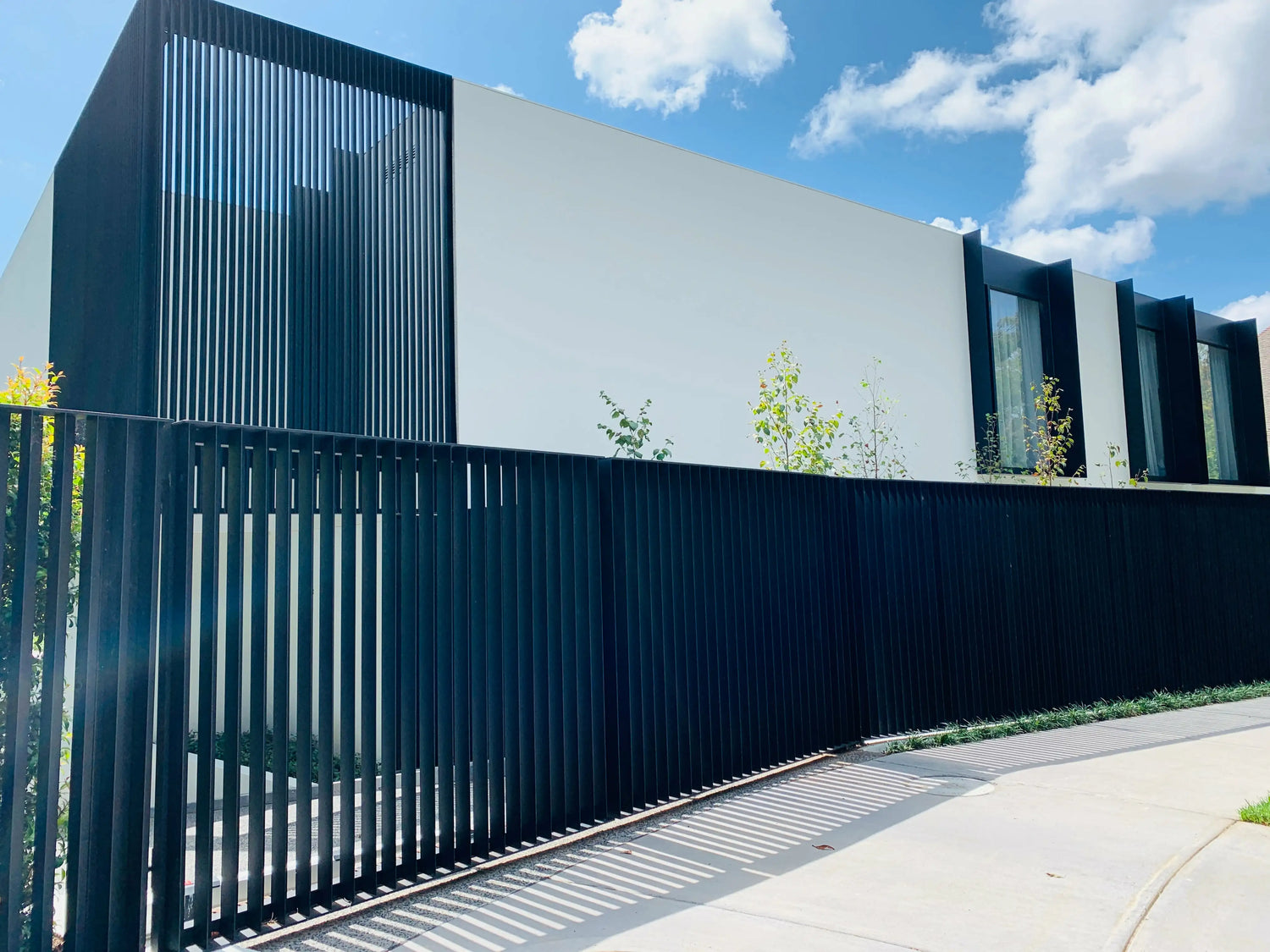
What Does a Complete Front Fence and Automatic Gate Package Actually Cost?
A complete front fence and automatic gate package in Australia typically costs between $8,000 and $15,000, depending on your design, materials, site conditions, and any added features like intercoms or parcel boxes. Custom or premium builds can push well beyond $15,000.
Most online pricing guides quote the gate or motor in isolation, which is not particularly helpful when you're budgeting for the full project. This guide covers the lot: fencing, gate panels, automation, civil works, electrical, permits, and the extras that round out a modern front entry.
In Melbourne specifically, the gate component alone ranges from $5,000 to $15,000+ in 2025, before fencing is factored in. The key variables are gate type (sliding vs. swing), fence material, whether your driveway slopes, your power source, and any smart features you want built in. This is the honest breakdown most companies won't give you, drawn from our experience across 2,500+ installations since 2015.
Breaking Down the Costs: Fence, Gate, and Automation Separately
Fencing Materials and Labour
Your front fence is typically the first line item. Here's what you can expect per metre, fully installed:
- Colorbond: $100–$180 per metre
- Aluminium slat or timber-look: $200–$300 per metre
- Timber or Hardwood: $75–$300 per linear metre
Fencing labour in Melbourne runs $70–$110 per hour, though most installers quote on a per-metre basis for standard jobs.
Gate Varieties
Gate costs vary significantly based on type and finish:
- Single swing automated gate: $4,500–$6,000 installed
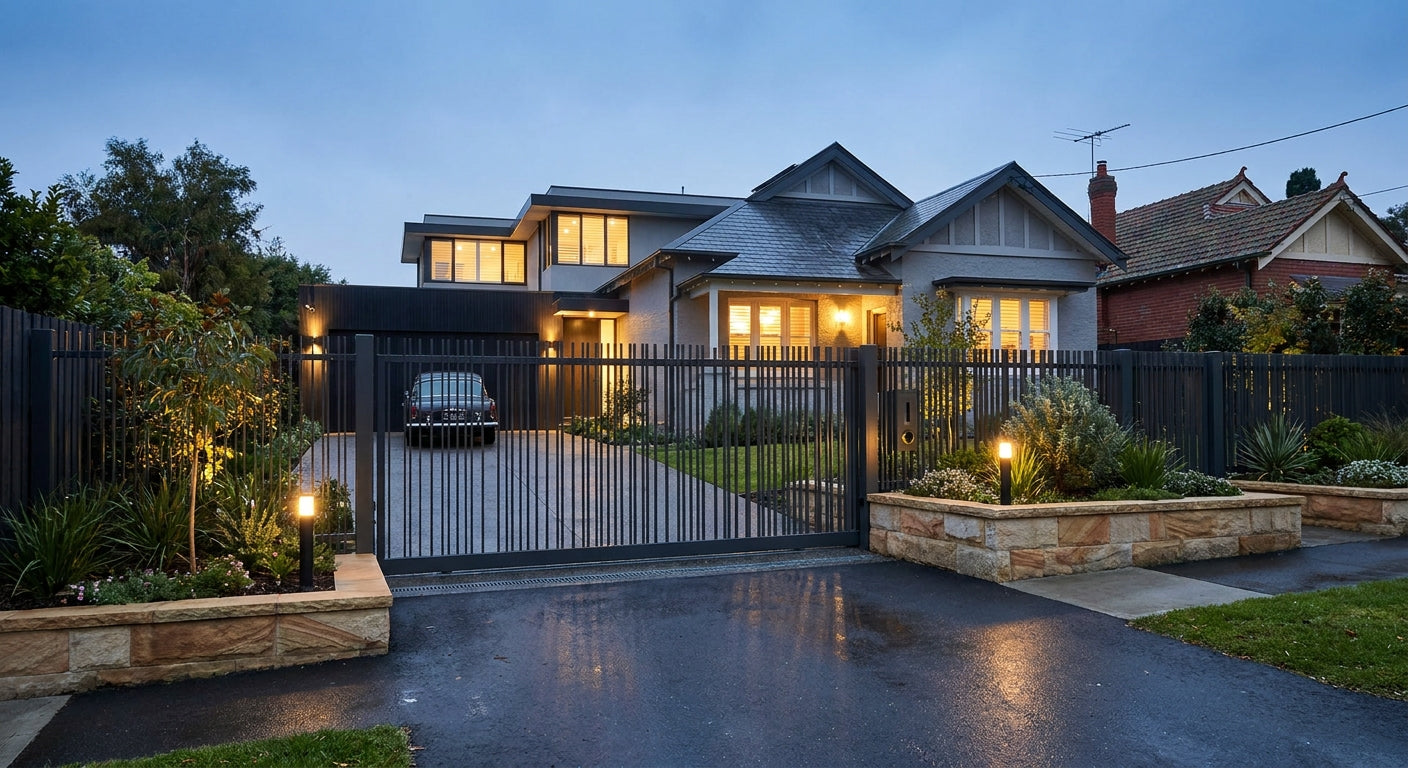
- Double swing automated gate: $5,000–$8,000+
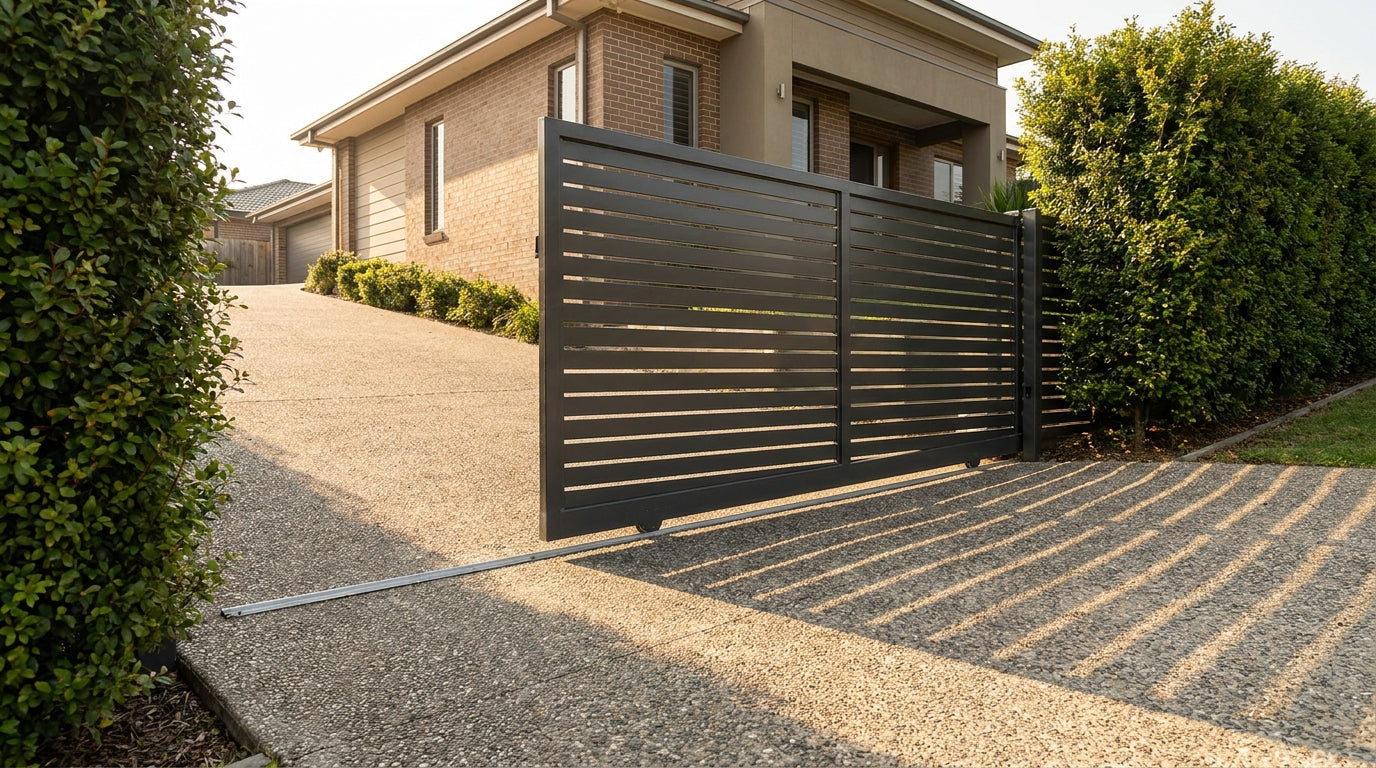
- Sliding gate with motor (basic): $4,500–$7,000
- Custom, Cantilever or Telescopic sliding gates: $7,000–$10,000+
- Fangates $40,000-45,000
Sliding gates cost roughly 10–20% more than swing gates usually. The difference comes down to precision track installation, heavy-duty rollers, and civil works With rising property density and dual-occupancy builds across Melbourne, sliding gates are increasingly popular because they save driveway space.
Automation Kits
A quality residential sliding gate motor sits in the $1000–$1,800 range depending on brand and torque rating. A swing motor kit with basic installation on an existing gate costs $2000–$2500 depending on motor type & accessories fitted.
Professional installation labour averages $500–$2,000 nationally, covering site preparation, concrete work, electrical wiring, safety sensor calibration, and compliance testing. It's not just about bolting a motor to a post.
The Hidden Costs Most Quotes Leave Out
This is where budget blowouts happen. If you've received a quote that seemed too good to be true, chances are these items were missing.
Civil Works
Sliding gates require a concrete strip or buried steel beam foundation for the track. The concrete strip footing must equal the gate width plus 300mm to accommodate the track, gate catches, and automation components. This is a non-trivial cost that many quotes gloss over entirely.
Post embedment is another area where corners get cut. At least one-third of the post length must be set below ground, with a minimum embedment of 600mm. Post failure is the leading cause of sliding gate problems, and it's entirely preventable with proper installation.
Sloped Driveways
If your driveway slopes, expect the job to take longer and cost more. A standard installation runs 1–3 days; a sloped site can stretch that to 3–5 days, adding significant labour costs. As a general rule, sloped blocks add 10–20% to standard costs, and complex site work can push civil costs alone to $1,500–$2,000. Gates should be fabricated to suit the sloping ground for the best finish.
Council Permits
In Victoria, most councils permit front fences up to 1.2m–1.8m without a permit. Go higher, or live near a public road or heritage-listed property, and you'll need approval. Permit costs can exceed $1,200 in certain councils. Melbourne councils including Boroondara, Yarra, and Stonnington require special approval in heritage overlay zones. Always check your local rules before committing to a design. Check with your council if you need a permit.
Power Options: Mains, Low-Voltage, or Solar?
You have three power options for your automatic gate: 240V mains, DC low-voltage, and solar. Each comes with different cost and installation implications.
240V mains is the most common choice, especially on new home builds All mains electrical connections legally require a licensed electrician in Australia. DIY electrical work voids your insurance and creates serious safety risks, no exceptions.
Low voltage 12v or 24v supply is a very popular option now due to the challenges associated with running mains power to the front of the property. Transformer kits are available with most gate motors and offer a safe and easy way to run power supply to your gate. Powered Gates Australia offers a large range of low voltage gate motors for this reason.
Solar gate automation is a good option if power supply is further than 50 meters, particularly in rural areas or large acreage blocks where trenching mains power to the gate location is costly or impractical. Solar kits cost between $900 to $1,500 and include solar panels (100–200W), lithium batteries, charge controllers, and weatherproof housings. In typical Australian conditions, a solar setup provides 50–100 daily gate cycles, which is more than enough for most residential properties. It also eliminates cable trenching entirely and reduces ongoing electricity costs to near zero.
Battery backup systems for mains-powered gates cost $250 and keep your gate operational during power outages.
For context, most electric gates consume 100–200 watts per day, costing roughly $50–$150 per year in electricity. Solar brings that running cost to practically nothing however batteries usually need to be replaced after 5 years.
Add-On Features That Affect Your Budget
A front gate is no longer just a gate. More homeowners are building a complete smart entry package that integrates security, convenience, and parcel management into one system.
Here's what the common add-ons cost:
- Intercom systems: $800–$2,000+
- Keypads, remotes, and card readers: $300–$1,200
- Wi-Fi and smartphone app integration: $300–$800
- Safety Sensors $250-$500
Parcel boxes integrated into the front entry are a growing trend. Combined with an intercom and smart lock, they create a genuinely useful system rather than a collection of separate gadgets. Smart home integration, including voice assistant compatibility and CCTV connectivity, is rapidly becoming a standard expectation for new gate installations.
The investment pays off beyond convenience. Automatic gates can increase property value by up to 5–10%, and properties with automated security systems see a 28% decrease in burglaries.
Running costs stay low over the long term. General servicing runs $150–$400 per visit (every 3-5 years), motor replacement costs $800–$2500 , and basic lubrication and track cleaning is essential. A well-maintained quality motor like BFT, Beninca, Nice, Roger or FAAAC should last 10–15 years before needing replacement....we have seen them go to 20 years!
Why Quality Materials and Brand Choice Matter More Than You Think
We see it regularly: homeowners buy a cheap gate motor from eBay or Amazon, and 18 months later they're stuck with a failed unit and no after-sales support. The supplier has moved on, the listing has disappeared, and there are no spare parts available in Australia.
Reputable Italian-made motor brands, including BFT, FAAC, Beninca, Nice, Roger Technology and Centsys, are engineered for longevity and backed by local distributors who carry genuine spare parts. As an authorised distributor of these brands, we can tell you the difference in build quality is substantial.
Quality extends beyond the motor. Adjustable hinges, heavy-duty rollers, and reinforced tracks are critical to long-term reliability. These components rarely get discussed in cost guides, but they're what separates a gate that runs smoothly for 15–25 years from one that starts grinding and jamming within a few seasons.
One specification detail that cheap suppliers routinely ignore: on sloped driveways, the motor must be rated for extra load. Motor capacity should be increased by 4-5 times to handle gravity working against the gate. Underspec the motor and you'll have issues
How to Choose the Right Company (and Avoid the Pretenders)
The gate automation industry has its share of operators who underquote, underdeliver, and disappear when something goes wrong. Here's how to sort the genuine companies from the pretenders:
- Verifiable track record: Look for years in operation, number of completed installations, and genuine customer reviews. Vague claims without specifics are a red flag.
- Warranty coverage: A reputable installer should offer at minimum a 2-year on-site warranty on installations, with product warranties backed directly by the manufacturer.
- Licences and insurance: $10 million public liability insurance is a baseline expectation. Confirm that staff hold relevant licences and, where applicable, police and working-with-children checks.
- After-sales support: Can the company service what they install? Do they stock spare parts? Will they answer the phone when something goes wrong two years from now?
- Authorised distributor status: Ask whether the company is authorised by the brands they sell. This determines whether warranty claims are actually honoured.
- Free expert advice: A company that offers genuine pre-sale guidance (via phone, chat, or site photo upload) is one that's confident in its expertise, not just chasing a quick sale.
Getting an Accurate Quote: What to Prepare
To recap the realistic numbers: budget $8,000–$15,000 for a complete front fence and automatic gate package. Custom or premium builds with smart entry features can exceed $15,000.
When you request a quote, ask for an itemised breakdown that separates fencing, gate panels, automation, civil works, electrical, and any council permit costs. If a quote lumps everything into one line, you have no way of knowing where costs are being padded or, more commonly, where they've been left out entirely.
The cheapest quote is rarely the best deal. Hidden civil works and poor-quality motors are exactly how low quotes become expensive problems six months down the track.
Ready to get started? Contact Powered Gates Australia for free expert advice, a detailed site assessment, or simply upload photos of your property for a personalised quote. We've been operating since 2015, with over 4,000 happy customers, 2,500+ completed installations, police-checked staff, and a 2-year on-site warranty on all installations. We supply and install Australia-wide, with our professional installation team servicing Melbourne and surrounds, including Geelong and the Mornington Peninsula.
Give us a call, start a chat, or send through your site photos. We're here to help you get this right the first time.

Leave a comment
All comments are moderated before being published.
This site is protected by hCaptcha and the hCaptcha Privacy Policy and Terms of Service apply.