
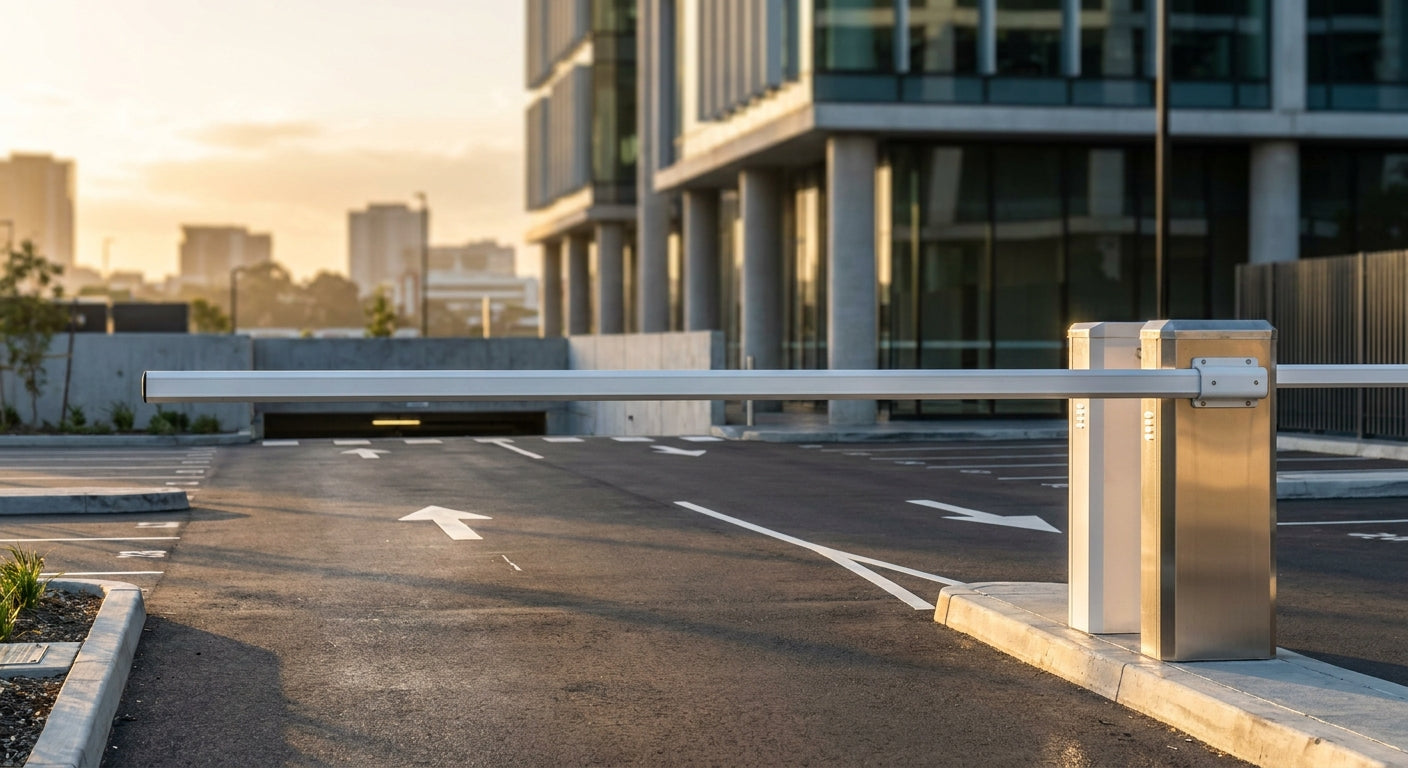
Why Uncontrolled Vehicle Access Is a Bigger Problem Than You Think
The numbers are stark. According to ABS 2024–25 Crime Victimisation Statistics, 236,500 cases of theft from vehicles and 64,400 households affected by motor vehicle theft were recorded across Australia. Add 102,500 instances of vehicle damage or vandalism, and the scale of the problem becomes impossible to ignore.
For property managers and business owners, uncontrolled vehicle access creates more than a security risk. It opens the door to liability exposure, insurance complications, and operational headaches that compound over time.
Australian standards reinforce this. AS 2890.1 governs car park design, and WorkSafe Victoria's OHS guidance makes a security risk audit a legal and design baseline for workplace car parks. Vehicle access control is not optional; it is a compliance requirement.
Boom gate barriers remain the most widely used and cost-effective physical solution for managing vehicle entry and exit across Australian commercial and industrial sites. Not all boom gates are built for the same job, however. This guide walks through the practical, site-specific factors that determine the right system for your application.
Where Boom Gates Are Used: Key Site Types Across Australia
Car parks: Strata complexes, shopping centres, and commercial buildings rely on boom gates to manage high vehicle throughput efficiently. They control who enters, when they enter, and how long they stay.
Schools and university campuses: Boom gates control peak-hour drop-off and pick-up traffic, restrict after-hours access, and protect students and staff from unauthorised vehicles on site. This is a growing priority for education facilities across the country.
Warehouses and industrial estates: Boom gates secure loading dock entries, restrict access to authorised personnel, and support shift-based entry management. In these environments, reliability is everything.
Caravan parks: Boom gates manage guest entry and exit, prevent unauthorised overnight access, and must accommodate larger vehicles including caravans, motorhomes, and towed trailers. Arm length and clearance are critical considerations here.
Hospitals, airports, and distribution centres: These are high-cycle environments where speed and uptime are non-negotiable. A boom gate failure at a busy hospital car park creates immediate operational disruption.
Mining and rural depots: Solar-powered, skid-mounted boom gates operate off-grid in harsh Australian conditions, providing security where mains power is not available.
Choosing the Right Boom Gate: Duty Cycle, Arm Length, and Motor Type
Duty Cycle: How Hard Does Your Boom Gate Need to Work?
Duty cycle refers to how many open-and-close operations a motor is rated to handle per day. Getting this wrong means either premature motor failure or paying for capacity you will never use.
Medium-traffic sites such as schools, caravan parks, and small warehouses typically require 200 to 1,000 operations per day. Commercial-grade 24V DC motor operators handle this workload reliably and efficiently.
High-traffic sites such as commercial car parks processing 200-plus vehicles per hour, hospitals, and large warehouses need continuous-rated operators capable of up to 5,000 operations per day. Industrial-grade boom gate motors have been tested for over 5 million total cycles, built for the most demanding environments on the market.
Arm Length: Matching the Boom to the Lane
Standard 3 to 4 metre arms suit single-lane car park entries. For wider commercial lanes, school entry points, and caravan park applications where caravans and motorhomes need to pass through, 5 metre arms are the better fit.
For lanes wider than 6-8 metres, or underground car parks with restricted overhead clearance, folding or telescopic arms solve the problem. Folding boom arms are specifically designed for situations where a straight arm cannot rise vertically without hitting a ceiling or structural beam.
Speed Matters
Modern rapid boom gates can cycle in as little as 1.3 to 1.5 seconds. At a busy car park entrance, that speed difference directly affects queue length and driver frustration. For high-throughput sites, rapid-cycle operators are worth the investment.
Right-sizing the system to the site is the key differentiator between a generic product purchase and an expert-specified solution. It is the difference we focus on with every recommendation at Powered Gates Australia.
Access Control Options: Matching the Credential to the Site
A boom gate is only as effective as the access control system behind it. Available methods include remote controls, RFID cards and proximity readers, keypads, intercoms, ANPR/LPR cameras, vehicle loop detectors, and mobile phone apps.
Car parks and strata: RFID cards or proximity readers provide fast, contactless access for residents and tenants. Loop detectors automate exit, so drivers do not need to present a credential when leaving.
Schools and hospitals: Layered access control combining RFID plus intercom, or keypad plus loop detector, is now the expected standard for higher-security sensitive sites. A single credential is no longer considered sufficient.
Caravan parks: Remote controls and RFID cards suit guest management well. Mobile app control adds convenience for park managers overseeing multiple entry points from a single device.
Warehouses and industrial sites: ANPR/LPR cameras enable vehicle plate recognition for authorised fleet entry without physical credentials. Drivers do not need to stop and scan; the system reads their plate and opens the barrier automatically.
A single boom gate operator can manage multiple entry points simultaneously when integrated with the right access control credentials. This is practical for large facilities looking to centralise site management without multiplying hardware costs.
Modern control boards also support integration with parking management software, making centralised operations straightforward.
Solar-Powered Boom Gates for Off-Grid and Remote Sites
Grid power is not always available, and connecting it can be expensive. Solar-powered boom gate options with built-in battery backup solve this problem for sites where mains power is unavailable or costly to run.
This is particularly relevant for Australian caravan parks in regional and coastal locations, rural warehouses, and mining depots. Solar and battery systems can sustain continuous operation without mains power, maintaining site security during outages and in locations that will never see a power line.
Aluminium boom arms are well-suited to Australian coastal environments due to their corrosion resistance. A quality aluminium arm in commercial use typically lasts 10 years or more with standard maintenance, making it a sound long-term investment.
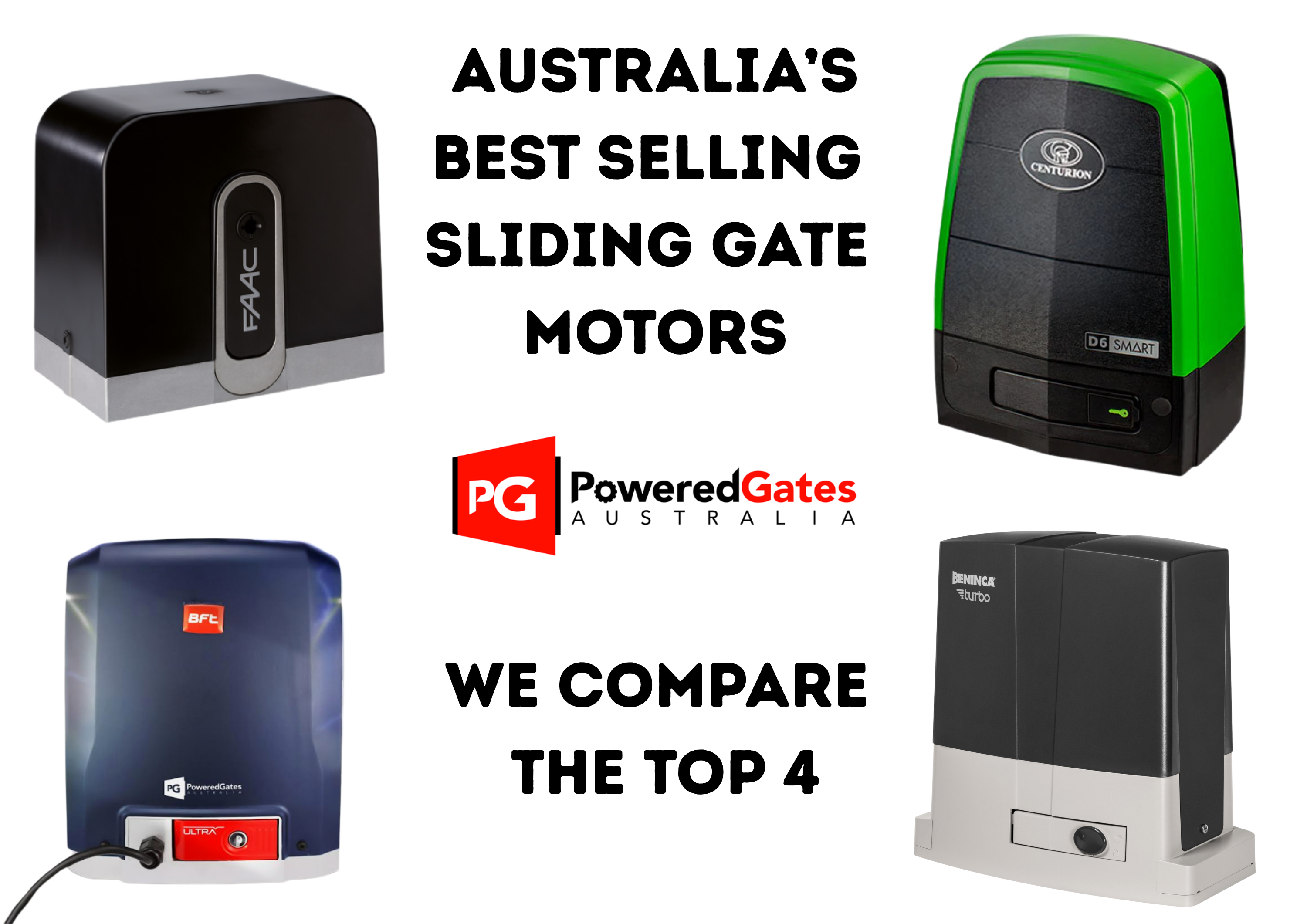
At Powered Gates Australia, we are authorised distributors of premium Italian-made brands including BFT, FAAC, Beninca, Centsys, Nice, and Sommer. These manufacturers produce solar-compatible and commercial boom gate operators that we supply through our online store with nationwide delivery across Australia.
Safety, Compliance, and Installation: What Australian Sites Must Know
Boom gates must comply with Australian safety standards. Required features include obstacle sensors, automatic reversing on contact, and clear visual signalling where pedestrian traffic may be present. Skipping these features is not just risky; it is a compliance failure.
AS 2890.1 governs car park design in Australia, and WorkSafe Victoria's OHS guidance makes a security risk audit a legal and design baseline for workplace car parks. Property managers and developers who overlook these requirements face real liability.
Installation labour for a boom gate on Australian commercial sites in 2026 typically adds $1,500 to $2,000 AUD to equipment cost, depending on site complexity and location. Factor this into project budgets from the start.
For sensitive sites such as schools and hospitals, installers should hold police checks and working-with-children checks. Our entire installation team is police and working-with-children checked, because we understand the trust required when working on these sites.
We offer professional boom gate installation, servicing, and repair across Melbourne and surrounds, backed by a 2-year on-site warranty and $10 million public liability insurance. For online purchases shipped Australia-wide, we provide a 2-year back-to-base warranty.
Trade and wholesale buyers, including installers and contractors, can access discounted pricing through our trade programme, with expert support for specifying the right system for any application.
Free expert advice is available via phone, chat, or by uploading site photos for a tailored boom gate recommendation. There is no obligation, and we are happy to help you get the specification right before you commit to a purchase.
Get the Right Boom Gate Barrier for Your Site
The right boom gate depends on your site type, traffic volume, arm length requirements, and access control needs. A one-size-fits-all approach leads to under-specified systems that fail early or over-engineered setups that waste your budget.
Since 2015, Powered Gates Australia has completed 2,500-plus installations and served 4,000-plus customers across car parks, schools, caravan parks, warehouses, and industrial sites. We have the hands-on experience to recommend the correct system for your specific application.
As authorised distributors of BFT, FAAC, Beninca, Centsys, Nice, and Sommer, we supply premium Italian-made boom gate operators with proven commercial and industrial performance.
Ready to find the right boom gate for your site? Reach out for free, no-obligation advice. Upload your site photos, give us a call, or start a chat. We will recommend the correct system, matched to your site, your traffic, and your budget.

Leave a comment
All comments are moderated before being published.
This site is protected by hCaptcha and the hCaptcha Privacy Policy and Terms of Service apply.